
Blue Collar or Bust!
It’s in the Code 186

Introduction: The Myth of the “Builder”
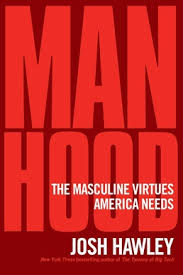
We’re continuing our discussion of Chapter 8 of Josh Hawley’s Manhood, focusing on the fourth role he claims men are uniquely called to play: that of the “builder.” I started working through this chapter last week, highlighting one of its central contradictions—namely, that Hawley romanticizes blue-collar labor while aligning himself politically with a movement that has spent the better part of half a century undermining the economic foundations of the American working class.
But there’s more to say here. In fact, the more closely I read this chapter, the more frustrated I become. That frustration operates on multiple levels—political, economic, theological—but one of them runs deeper than the others. It’s a frustration that’s been with me for decades, dating back to my time in the evangelical Christian world. And it’s on full display in this chapter.
What I want to do today is examine not only how Hawley supports economic policies that have actively harmed the very working-class men he claims to champion, but also how he baptizes his views—on masculinity, labor, and social order—so that they appear to be rooted in Christianity itself. In other words, this isn’t just an argument about economics or gender roles. It’s about how ideology gets dressed up as theology, and how deeply that move has shaped the way many American Christians understand both work and manhood.
Baptizing Capitalism
One of the most persistent questions I’ve encountered—both from others and within my own journey—is this: why do so many American Christians assume that free market capitalism is not only compatible with Christianity, but somehow uniquely biblical?
This assumption didn’t emerge overnight. In the early years of American history, particularly in the aftermath of the Revolutionary period, many Christians were still wrestling with how their faith intersected with emerging economic systems. But over time, and especially among white American Protestants, a shift occurred. Capitalism moved from being seen as one possible economic arrangement among many, to being understood as the natural—and eventually the necessary—expression of Christian principles.
To be clear, there have always been dissenting voices. There have always been Christians who challenged the moral and theological foundations of capitalism, who questioned its impact on the poor, and who resisted its tendency toward inequality and exploitation. But those voices have been marginalized, especially within conservative Protestantism. Over the past 150 years—and even more intensely over the past 50—free market ideology has become deeply embedded in the theological imagination of the American right.
As conservative Protestants aligned themselves more fully with the Republican Party, the principles of neoliberal economics—small government, tax cuts, deregulation, hostility toward organized labor—were no longer just policy preferences. They became articles of faith. These positions are defended with a fervor that often mirrors, or even exceeds, the passion brought to issues like abortion or LGBTQ rights.
That’s the backdrop for Hawley’s chapter on “builders.” What’s striking is that he never actually argues for capitalism as a Christian system. He doesn’t need to. It’s simply assumed. It’s part of the air he breathes, and he writes as if it’s part of the air his readers breathe too.
And that assumption matters. Because when something is taken for granted at that level, it no longer needs to be defended—it only needs to be reinforced. That’s why Hawley can make sweeping claims about work, masculinity, and the economy without ever pausing to justify the underlying framework. For him, capitalism isn’t a choice. It’s just reality. More than that, it’s moral reality.
The Mythology of Work
Alongside this baptized capitalism, Hawley constructs a mythology of work that reveals a great deal about how the contemporary right understands both labor and masculinity. If we want to understand the cultural and political imagination behind these ideas, this chapter offers a remarkably clear window.
Hawley presents a series of assumptions—dogmas, really—about what work is, what it means, and who it’s for. These aren’t carefully argued positions. They’re asserted, repeated, and treated as self-evident truths. And because they’re so familiar within certain circles, they often go unchallenged.
But when we slow down and examine them, their ideological nature becomes obvious.
Dogma 1: Real Work Is Blue-Collar Work
Despite framing the chapter around the idea of “building,” Hawley spends very little time actually talking about what builders do. Instead, he uses the concept as a launching point for a broader claim: that real work—men’s work—is fundamentally blue-collar.
This is the heart of his argument. Men, he insists, are made for this kind of labor. They are naturally oriented toward it. And when the economy shifts away from blue-collar industries, it doesn’t just change the job market—it attacks masculinity itself.
To support this claim, Hawley blames the political left for the decline of blue-collar jobs, accusing it of preferring an economy built on white-collar service work that produces “nothing tangible” and caters to an educated elite. There’s a lot to unpack in that assertion, but what stands out most immediately is his dismissiveness toward entire categories of labor.
White-collar work, in his telling, is not just different—it’s lesser. It lacks substance. It lacks dignity. It lacks masculinity.
And this becomes even clearer when he addresses efforts to bring more men into fields like healthcare, education, and social work. While he offers a token acknowledgment that these professions aren’t inherently bad, the underlying message is unmistakable: these are not real men’s jobs. At best, they serve a secondary function—providing role models for boys who will, ideally, grow up to do something more appropriately masculine.
What’s missing here is any genuine appreciation for the value of these professions. Teaching, caregiving, administration—these are not treated as meaningful forms of work in their own right. They are, at best, placeholders. Deviations from the norm.
And that norm, for Hawley, is clear: a man with his hands in the dirt, producing something tangible, embodying a particular vision of strength and usefulness that aligns neatly with a nostalgic image of America’s industrial past.
Dogma 2: Men Have No Value Without Work
Closely tied to this is a second dogma: that men derive their value—and even their identity—from their work.
Hawley does make a passing claim that “all work is worth doing,” but the examples he offers tell a different story. The work he celebrates is consistently manual, physical, and tied to production. There is no meaningful engagement with forms of labor that don’t fit this mold.
More troubling, however, is the implication that men who do not engage in this kind of work lack dignity altogether. Work is not just something men do. It is what makes them men.
This belief shows up in his critique of work-life balance, which he treats as a symptom of cultural decline. The idea that someone might limit their working hours, prioritize family life, or seek rest is framed as evidence of feminization—a departure from true masculinity.
But what this really reveals is an underlying commitment to a particular kind of economic system—one that depends on workers being willing to give more, produce more, and accept less in return. By framing overwork as virtue, Hawley effectively aligns masculinity with exploitation.
And that has real consequences. Because if a man’s worth is tied entirely to his productivity, then any failure to meet that standard becomes a moral failure. Unemployment, underemployment, disability, burnout—these are no longer just economic or social issues. They become existential ones.
Dogma 3: Climate Change Is a Conspiracy
Perhaps the most striking—and revealing—section of the chapter is Hawley’s discussion of climate change.
In a section ironically titled “Reject Nihilism,” he dismisses environmental concerns as a form of ideological manipulation. Climate change, in his telling, is not a scientific reality but a narrative constructed by the left to undermine masculine labor.
The logic here is telling. If men are defined by their work, and if that work is tied to industries that have significant environmental impact, then acknowledging that impact becomes a threat—not just to those industries, but to masculinity itself.
So the solution is denial.
Environmental concerns are recast as nihilistic because they suggest that human activity—particularly industrial activity—can be harmful. And if that’s true, then the work that defines men becomes morally complicated.
Rather than engage that complexity, Hawley rejects it outright. There is no room here for thinking about how to balance economic production with environmental stewardship. No consideration of how industries might evolve. Just a stark choice: affirm traditional labor or embrace nihilism.
Hawley’s Theology of Work
Given how strongly Hawley frames his argument in Christian terms, one might expect a robust theological foundation for these claims. But what we actually get is surprisingly thin.
Biblical references are sparse, and when they do appear, they are often stretched beyond recognition. The story of the Exodus, for example, is reduced to a lesson about the dignity of work—rather than a profound statement about liberation from oppression. The Genesis account of Adam becomes the central pillar of his theology, with a handful of verses doing an enormous amount of ideological work.
Over and over, Hawley asserts that the Bible supports his vision. But he rarely demonstrates it. Instead, he relies on familiar tropes—dominion over the earth, the value of labor, the image of God—without engaging the broader biblical context.
The result is a theology that feels less like an interpretation of scripture and more like a projection onto it. The Bible becomes a mirror reflecting back the assumptions he already holds.
And those assumptions are clear: that men are defined by their work, that manual labor is the highest form of that work, and that this arrangement is not just socially beneficial but divinely ordained.
Conclusion: Dogma, Not Destiny
By the end of the chapter, the pattern is unmistakable. Hawley isn’t offering a carefully reasoned vision of masculinity or work. He’s repeating a set of deeply entrenched dogmas—about gender, labor, and economics—that have been circulating within certain corners of American culture for decades.
Real men, in this framework, are defined by their work. Real work is blue-collar. Other forms of labor are tolerated but not respected. And any challenge to this hierarchy—whether it comes from economic shifts, cultural changes, or environmental concerns—is treated as a threat.
This is not a neutral description of reality. It’s an ideological construction, one that serves to reinforce existing power structures while presenting itself as common sense.
And perhaps most tellingly, it’s a construction that goes largely unexamined. Hawley doesn’t defend these ideas so much as assume them. Alternative perspectives are dismissed out of hand, labeled as liberal fiction or cultural decay.
But that’s precisely why they need to be examined.
Because beneath the rhetoric of dignity and purpose lies a much harsher reality: a vision of society in which men are valued only for what they produce, where entire categories of work are devalued, and where economic exploitation is reframed as moral virtue.
In the next piece, we’ll pick up where this leaves off and look at another crucial element of Hawley’s argument—one that cuts even deeper into its contradictions. Because when it comes to “work,” Josh Hawley isn’t just wrong.
He’s also profoundly hypocritical.
And that hypocrisy tells us a great deal about who this vision of masculinity is really for—and who it leaves behind.
-Dan Miller